Understanding Attachment Styles for Better Connection
Understanding Attachment Styles for Better Connection
Hey everyone! So, you're interested in attachment styles? Awesome! It's a fascinating topic, and honestly, understanding your own attachment style and those of the people in your life can be a total game-changer for your relationships. It's not about labeling people or putting them in boxes, but more about gaining insight into why we behave the way we do in relationships, both romantic and platonic.
Think of attachment styles as blueprints for how we relate to others. They're shaped by our early childhood experiences, particularly our relationship with our primary caregivers. It's not a fixed thing either â€" you can grow and change your attachment style throughout your life with self-awareness and conscious effort.
The Four Main Attachment Styles
There are four main attachment styles that psychologists typically talk about. They're not perfectly neat categories, and most people fall somewhere on a spectrum, but understanding these basics can be really helpful.
Secure Attachment
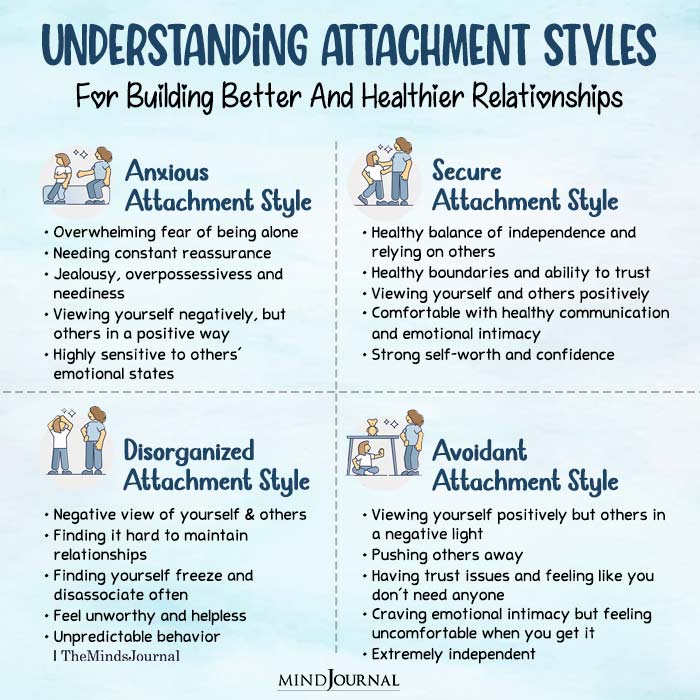
These are the lucky ones! (Or, maybe the ones who've done some work on themselves.) People with a secure attachment style generally feel comfortable with intimacy and independence. They trust their partners and don't get overly anxious or avoidant. They're able to communicate their needs effectively and are generally comfortable both on their own and with others. Think of it as having a healthy balance. They are confident in their ability to form and maintain relationships.
Anxious-Preoccupied Attachment
Individuals with an anxious-preoccupied attachment often crave closeness and reassurance. They might worry about abandonment, even when there's no real reason to. They can be clingy or needy in relationships, and they often have a fear of being alone. Think of it as heightened sensitivity to rejection and a constant need for validation. Their self-esteem can be heavily tied to their partner's approval.
Dismissive-Avoidant Attachment
On the opposite end of the spectrum from anxious-preoccupied, we have dismissive-avoidant. People with this style often suppress their emotions and prioritize independence to a fault. They might avoid intimacy or commitment, valuing self-reliance above all else. They often have difficulty expressing vulnerability or asking for help, possibly due to past experiences where they felt their needs weren't met. This might manifest as emotional distance or suppression of feelings in relationships.
Fearful-Avoidant Attachment
This is a more complex one â€" it's a blend of anxious and avoidant tendencies. People with a fearful-avoidant attachment style want closeness, but they simultaneously fear intimacy. They might crave connection but pull away when it gets too close, creating a cycle of push and pull. This can stem from inconsistent caregiving in childhood, leading to conflicting feelings about relationships â€" wanting them but fearing the hurt and vulnerability they can bring.
How Attachment Styles Impact Relationships
Understanding attachment styles can shed light on relationship dynamics. For example:
- An anxious-preoccupied person might constantly text their partner, needing reassurance, while their dismissive-avoidant partner might find this overwhelming and pull away.
- Two anxiously attached individuals might end up in a relationship characterized by intense highs and lows, with lots of drama and insecurity.
- A secure individual can often provide a stable and supportive base for a partner with a less secure attachment style, helping them feel safe enough to explore their vulnerabilities.
- Two fearful-avoidant individuals might struggle to form deep connections, perpetually circling each other without fully committing.
It's crucial to remember that these are just tendencies. Relationships are complex, and other factors play a role. But recognizing these patterns can help you navigate conflicts more effectively and communicate your needs more clearly.
Can You Change Your Attachment Style?
The good news is: yes! While your core attachment style is shaped early in life, it's not set in stone. With self-awareness, therapy, and conscious effort, you can develop a more secure attachment style. This often involves:
- Self-reflection: Understanding your triggers and patterns of behavior is the first step.
- Therapy: A therapist can provide a safe space to explore your past experiences and develop healthier coping mechanisms.
- Mindfulness: Practicing mindfulness can help you manage anxiety and regulate your emotions.
- Healthy Relationships: Surrounding yourself with supportive and secure individuals can help you learn healthier ways of relating to others.
Think of it like learning a new skill â€" it takes time and effort, but it's definitely achievable. The journey to a more secure attachment style is often one of self-discovery and growth.
Beyond the Four Styles: The Nuances
It's important to remember that these four categories aren't exhaustive. Attachment is a spectrum, and many people exhibit characteristics of multiple styles. Your attachment style might also shift depending on the relationship. You might have a secure attachment with your best friend but an anxious attachment with your romantic partner, for instance. The key is understanding your own patterns and how they impact your interactions.
Applying This Knowledge to Your Life
Knowing your attachment style and those of your significant others doesn't mean you're doomed to repeat unhealthy patterns. It's about gaining a deeper understanding of yourselves and working towards healthier relationships. By acknowledging your tendencies and communicating openly with your partners, you can create more fulfilling and secure connections.
Consider journaling about your relationship patterns, reflecting on past relationships, and perhaps even taking an online quiz (though remember they're not definitive diagnoses). The ultimate goal is self-awareness and a commitment to healthy relationships built on understanding and empathy.
Frequently Asked Questions
Q: Are attachment styles destiny?
A: No! While your early experiences shape your attachment style, it's not fixed. With self-awareness and effort, you can change your patterns and develop a more secure attachment.
Q: Can I figure out my attachment style on my own?
A: You can definitely do some self-reflection, but working with a therapist can provide deeper insight and support in changing your patterns.
Q: What if my partner and I have very different attachment styles?
A: This can be challenging, but it's not impossible. Open communication, understanding, and potentially couples therapy can help you navigate these differences.
Q: Is there a "best" attachment style?
A: Secure attachment is generally considered the healthiest, but all styles have their strengths and weaknesses. The goal is not to strive for a specific style, but to cultivate healthy relationship patterns.
Q: Where can I learn more about attachment theory?
A: There are many excellent books and articles on attachment theory. You can also search for qualified therapists specializing in attachment-based therapy.
I hope this helps you understand attachment styles a little better! Remember, it's a journey of self-discovery and growth. Be kind to yourself, and focus on building healthy, fulfilling relationships.


Comments
Post a Comment